Local Guide — Updated 2026
Kiteboarding in Miami
The complete guide to kiteboarding spots, wind season, gear, and local tips. From a Miami kiteboarder who has spent years on the water at Crandon Park, Hobie Beach, and beyond.
Why I Love Kiting in Miami
Kiteboarding is my primary sport. When I am not analyzing GSE preferred shares or writing code, I am on the water. Miami has world-class conditions: warm water year-round, consistent wind patterns, flat-water sandbar riding, and a vibrant kite community.
There is nothing like clipping into your harness, sending the kite to twelve o'clock, and feeling that first pull. The city skyline behind you, dolphins in the channel, warm water under your board. Kiteboarding in Miami is not just a sport — it is a way of life. And the best part? You can do it almost every day of the year.
For more about my kiting life, see my kiteboarding page and eFoil adventures. For the gear I recommend, check out my gear recommendations.
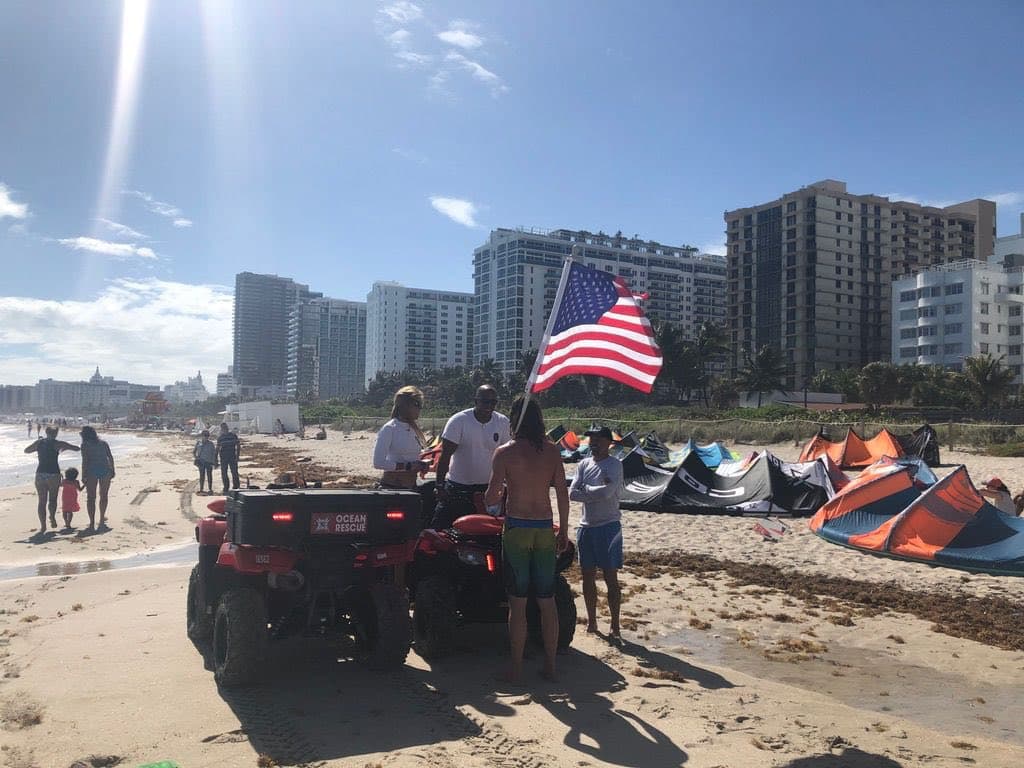
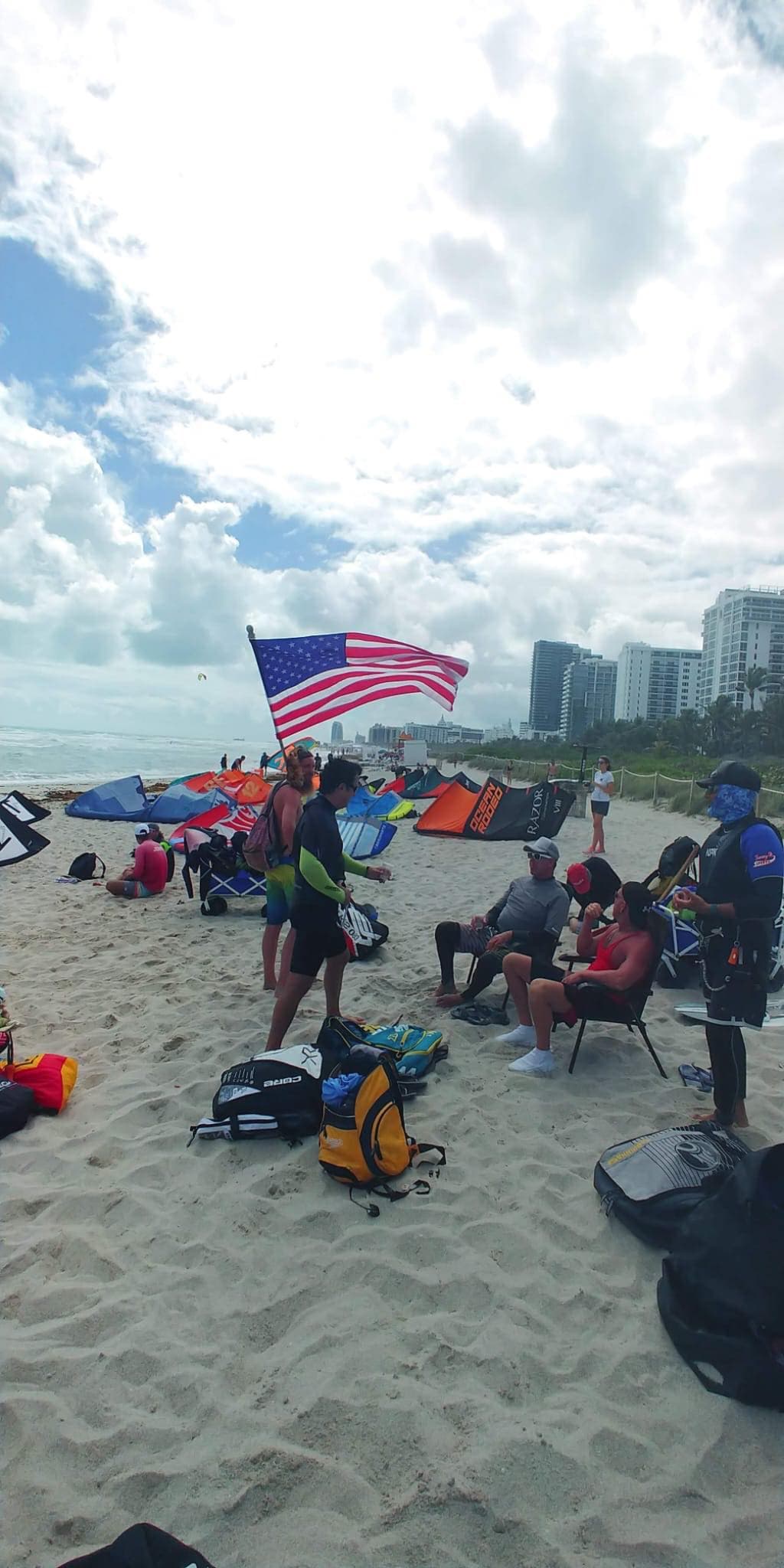
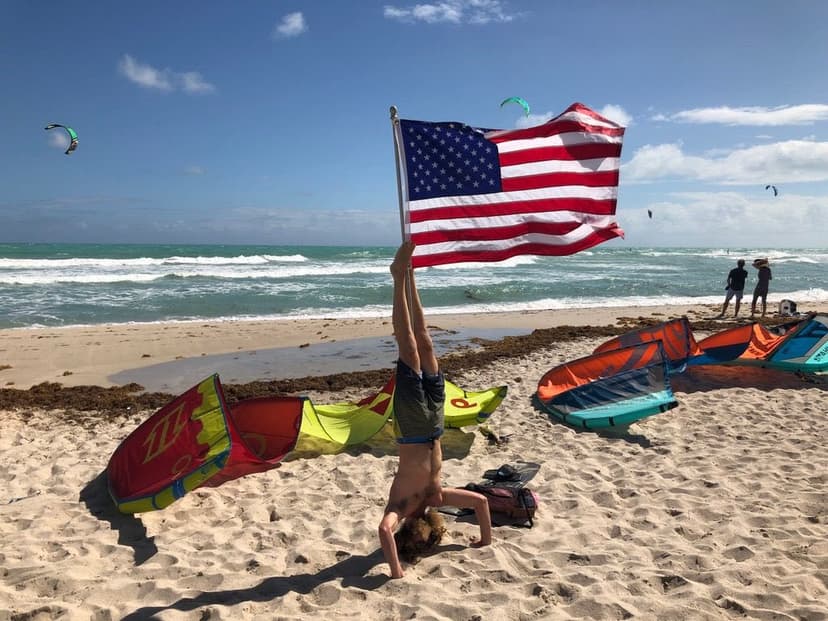
Why Miami Is the Best Place to Learn Kiteboarding
If you could design the perfect city to learn kiteboarding, it would look a lot like Miami.
Flat, Shallow Water
Crandon Park's sandbar is waist-deep for hundreds of yards. When you crash (and you will crash), you just stand up. No deep-water panic, no long swims back. This alone accelerates learning by weeks compared to deep-water spots.
Warm Year-Round
Water temperatures range from 72-85°F. No wetsuit needed most of the year, and even in winter a thin shorty is enough. Cold water saps energy and makes learning miserable. In Miami, you stay comfortable for hours.
Consistent, Predictable Wind
Winter cold fronts deliver 15-25 knot days every week like clockwork. Spring trade winds are moderate and steady. You can plan lessons in advance and actually get on the water. Some locations have great wind once a month — Miami has it multiple times a week.
No Heavy Gear Required
No 5mm wetsuit, no boots, no gloves, no hood. Just board shorts, a rashguard, and sunscreen. Less gear means less hassle, faster setup, and more time on the water. Traveling to Miami for a kite trip? Your bag is half the weight.
Multiple Spots for Every Wind Direction
East wind? Crandon Park. North wind? Hobie Beach. South wind? Matheson Hammock. No matter what direction the wind blows, there is a spot that works. This flexibility means more rideable days than almost any other location.
World-Class Instructors
Miami's year-round wind attracts top IKO and PASA-certified instructors from around the world. You will learn from people who teach hundreds of students a year and know every inch of the local spots.
The Best Kiteboarding Spots in Miami
Five spots for every wind direction and skill level.
Crandon Park — Key Biscayne
Premier SpotThe crown jewel of Miami kiteboarding. A massive sandbar creates a waist-deep playground that extends hundreds of yards offshore. Perfect for beginners learning to ride and experts practicing tricks. East wind exposure, clean ocean water, and parking right at the beach. The sandbar is visible at low tide and creates flat, warm water ideal for progression.
Hobie Beach — Rickenbacker Causeway
Accessible SpotLocated on the causeway to Key Biscayne, Hobie Beach is the most accessible kite spot in Miami. Free parking along the road, easy launch from the beach, and consistent wind. The water is shallow for the first 100 yards, making it beginner-friendly. Choppy in strong wind due to boat traffic in the channel.
Virginia Key — North Point
Advanced SpotThe north point of Virginia Key catches clean, unobstructed wind. More advanced than Crandon or Hobie — deeper water, stronger currents, and bigger waves when swells wrap around the key. Experienced kiters love the wave riding potential here. Less crowded than Crandon.
Matheson Hammock — Coral Gables
South Wind SpotWhen the wind shifts south — which happens regularly in spring and summer — Matheson Hammock becomes the go-to spot. A man-made atoll pool provides flat water, and the open bay beyond offers more space. Less well-known than the Key Biscayne spots, so it tends to be less crowded.
South Beach — Lummus Park
Occasional SpotNot a primary kite spot, but rideable on strong east days. The beach is wide, the water is open ocean, and the scenery is unbeatable. The challenge is launch space — South Beach is crowded, and you need significant room to launch and land safely. Best early morning before the beachgoers arrive.
Wind Season & Conditions
Winter (November - March)
Peak seasonThe best season. Cold fronts push through every 5-7 days, bringing strong north and northeast winds. 15-25+ knot days are common. Water temperature drops to the mid-70s — still warm by most standards. This is when Miami kiteboarding is world-class.
Spring (April - May)
GreatTransition period. Trade winds settle in with consistent east and southeast patterns. Wind is moderate (12-18 knots) but very reliable. Warmer water, fewer crowds. Excellent for progression and long sessions.
Summer (June - September)
Light wind — bring a foilLighter, more variable winds. Afternoon sea breezes can provide 10-15 knot sessions, but it is less consistent. Thunderstorms build in the afternoon — always watch the sky and have a plan. Foil kiting is popular in the lighter summer winds. Hurricane season runs June through November.
Fall (October - November)
Building to peakWind picks back up as cold fronts return. October can be hit or miss, but November is consistently windy. The transition from summer to winter patterns creates some of the best sessions of the year when fronts stall over South Florida.
Wind Patterns Deep Dive — Month by Month
Miami's wind comes from two main sources: cold fronts (winter) and thermal sea breezes (summer). Understanding these patterns helps you plan trips and pick the right gear.
How Miami's Wind Works
Cold Fronts (November–March): Low-pressure systems push south from the continental US, bringing strong north and northeast winds for 1-3 days at a time. These fronts are the backbone of Miami's kite season. Wind typically builds the day before the front arrives, peaks as it passes, and fades over the following 1-2 days before the next front.
Trade Winds (March–May): As cold fronts weaken in spring, subtropical trade winds fill in with reliable east and southeast flow. Moderate (12-18 knots) but very consistent. The most pleasant conditions of the year.
Thermal Sea Breeze (May–October): In summer, the land heats up faster than the ocean, creating an onshore breeze that typically builds between 11 AM and 2 PM and fades by sunset. Sea breezes are lighter (8-15 knots) and shorter-lived, but they are remarkably reliable on clear days. The trick is being ready to go when it fills in.
| Month | Avg Knots | Direction |
|---|---|---|
| January | 14-18 | N / NE |
| February | 14-18 | N / NE |
| March | 13-17 | NE / E |
| April | 12-16 | E / SE |
| May | 10-14 | SE / E |
| June | 8-12 | SE / S |
| July | 8-12 | E / SE |
| August | 8-12 | E / SE |
| September | 8-13 | E / Variable |
| October | 10-15 | NE / E |
| November | 13-17 | N / NE |
| December | 14-18 | N / NE |
Wind data is approximate, based on years of local observation and historical averages. Actual conditions vary — always check the forecast before heading out. Best forecasting tools: Windy, iKitesurf, Windguru.
Beginner's Progression Path
Kiteboarding has a learning curve, but it is one of the most rewarding journeys in any sport. Here is what to expect from your first day to your first year.
Week 1 — Trainer Kite & Beach Practice
You start on the beach with a small trainer kite (2-3m). This teaches you the wind window, kite control, steering, and power management. It feels like flying a supercharged stunt kite. You will also learn how to set up gear, safety systems, and how the quick-release works. Expect to spend 2-3 lessons here. By the end, you should be able to fly the trainer kite with one hand and keep it stable in the power zone.
Everyone starts here. The trainer kite is pure fun, and you will be surprised how quickly you build muscle memory.
Month 1 — Body Dragging & Water Starts
Now you move to a full-size kite on the water — but no board yet. Body dragging teaches you to control a real kite while in the ocean. You will learn to relaunch the kite from the water, body drag upwind (essential for recovering your board), and generate power. Once body dragging feels natural, your instructor introduces water starts: getting up on the board for the first time. Expect lots of short rides and crashes.
The water start is the hardest part. Once you crack it, everything accelerates. Most people get their first rides within 6-10 lessons.
Month 3 — Riding Upwind
This is the milestone that changes everything. Riding upwind means you can get back to where you started instead of drifting downwind. You are now independent — no more walk of shame down the beach. You start to build endurance, improve your stance, and the board feels like an extension of your body. Sessions go from 15 minutes to over an hour.
Riding upwind is the breakthrough moment. Once you can stay upwind, every session is pure freedom.
Month 6 — Jumping & Transitions
With solid board control and upwind riding, you start to play. Small jumps (sending the kite overhead while popping off the water), transitions (changing direction without stopping), and riding toeside. Your first jump — even just a few feet — is an unforgettable feeling. Some people progress faster, some slower, but by month six most dedicated students are jumping.
Your first jump will make you laugh out loud. This is when kiteboarding goes from a skill you are learning to a sport you are living.
Year 1 and Beyond — Your Own Style
After a year of consistent riding, you develop your own style. Some kiters chase big air and loops. Others ride waves with directional boards. Many move into foiling — riding a hydrofoil board that lifts you above the water, silent and smooth. The beauty of kiteboarding is that it never gets old. Ten years in, I am still learning new things every session.
The progression never ends. That is what makes kiteboarding the best sport on the planet.
Safety & Self-Rescue
Kiteboarding is an extreme sport. These safety fundamentals are not optional — they are the foundation of every session. Knowing this material makes you a better, more confident rider.
Take Professional Lessons
This is non-negotiable. Kiteboarding is not something you can teach yourself from YouTube. A certified instructor (IKO or PASA) teaches you safety systems, right-of-way rules, self-rescue, and proper technique. Budget for 6-12 hours of instruction before riding independently. It could save your life.
Know Your Self-Rescue
Every kiter must know how to self-rescue. If your kite fails, you should be able to: (1) activate your quick-release, (2) secure the kite on the water, (3) wrap the lines, (4) use the kite as a sail to drift downwind to shore. Practice this in calm conditions so it becomes automatic in an emergency.
Check Conditions Before Every Session
Read the forecast, check the radar, and look at the sky. In Miami, afternoon thunderstorms build fast in summer. Lightning is the number one weather danger for kiters. If you see dark clouds building or hear thunder, pack up immediately — do not wait. Use apps like Windy, iKitesurf, or Windguru.
When NOT to Go Out
Do not kite when: thunderstorms are forecast within 2 hours, wind is offshore (blowing away from shore) without a rescue boat, wind exceeds your ability, you are alone at an unfamiliar spot, or the wind direction has you drifting toward hazards (bridges, rocks, shipping channels). There will always be another session. No single session is worth your life.
Right-of-Way Rules
Kiters on starboard tack (right hand forward) have right of way. The upwind kiter keeps their kite high, the downwind kiter keeps their kite low. When riding near other kiters, give plenty of space — kite lines extend 20-25 meters. When entering or exiting the water, always yield to riders on the water.
Essential Safety Gear
Always wear a helmet, especially at Crandon's sandbar where the water is shallow. A Coast Guard-approved impact vest provides flotation and protects your ribs. Carry a safety knife (hook knife) to cut lines in an emergency. Use a kite leash connected to your harness. Consider a GPS watch or phone in a waterproof case so someone can find you.
The Local Kite Community
Kiteboarding is a community sport. The people you meet on the beach become your session partners, your safety net, and your friends. Miami's kite community is one of the best in the world.
Kite Schools & Lessons
Miami has several IKO-certified kite schools offering lessons at Crandon Park and Hobie Beach. Look for schools with experienced instructors who teach at the sandbar — the shallow water makes learning safer and faster. Most schools offer 2-3 hour lessons, package deals for 6-12 hours, and gear rental.
Expect to pay $200-350 per lesson (2-3 hours including gear). Group lessons are cheaper but slower. Private lessons are worth the investment for faster progression.
Local Shops
Several kite shops in the Miami area carry gear from the major brands. Shops are great for trying harnesses (fit matters), testing boards, and getting local advice. Staff at kite shops are almost always riders who know the spots intimately.
Many shops offer demo gear days where you can try new kites before buying. Used gear is also available and can save you 30-50% on quality equipment.
Community & Sessions
The Miami kite community is welcoming and diverse. Riders from all over the world call Miami home, and you will hear Spanish, Portuguese, French, and a dozen other languages on the beach.
Join local kiteboarding groups on Facebook and WhatsApp to find session partners, get real-time wind reports, share rides to spots, and buy/sell used gear. The community looks out for each other — experienced riders help newcomers, and everyone watches out for safety.
Crandon Park on a windy Saturday is a scene. Dozens of kites in the air, music on the beach, people grilling after sessions. It is the best way to meet the community.
Events & Competitions
Miami hosts kiteboarding events throughout the winter season, including freestyle competitions, downwinder races, and charity rides. These are great to watch even if you are not competing. The community rallies around these events.
The annual Key Biscayne downwinder — riding from Crandon Park to Matheson Hammock with the wind — is a bucket list experience for every Miami kiter.
Gear Recommendations
Kites
A quiver of two kites covers 90% of Miami conditions: a 9-10m for strong days (18-25 knots) and a 12-13m for moderate days (12-18 knots). Popular brands: Core, Duotone, Cabrinha, Naish. For summer, consider a 15-17m or a foil kite.
Boards
A twin-tip is the most versatile board for Miami's flat water. 135-140cm for most riders. For wave riding at Virginia Key, add a directional surfboard. For light wind, a hydrofoil board opens up the summer months.
Harness
Waist or seat harness, personal preference. Mystic and Ride Engine make the best harnesses. A seat harness provides more lower back support for long sessions. Replace your harness every 2-3 years.
Sun Protection
In Miami, sun protection is non-negotiable. A lycra rashguard with UV50+ protection, reef-safe sunscreen (SPF 50+), and polarized sunglasses with a strap. Wear a helmet, especially at Crandon's sandbar.
For more detailed gear reviews and comparisons, see my full gear recommendations.
Frequently Asked Questions
What is the best kiteboarding spot in Miami?
Crandon Park on Key Biscayne is the best overall kiteboarding spot in Miami. The massive sandbar creates waist-deep, flat water perfect for all skill levels. It has the best wind exposure, cleanest water, and most space. It is Miami's equivalent of Maui's Kite Beach.
When is the best time to kiteboard in Miami?
November through March is peak season. Cold fronts bring strong, consistent north and northeast winds every 5-7 days. You can expect 10-15+ rideable days per month during winter. The water is still warm (mid-70s F) and the air temperature is perfect.
Can beginners learn to kiteboard in Miami?
Yes. Miami is an excellent place to learn, particularly at Crandon Park and Hobie Beach. The shallow, warm water makes learning safer and more comfortable. Take lessons from a certified instructor — IKO or PASA certification is the standard. Never try to learn on your own; kiteboarding has a steep learning curve and real safety risks.
Do you need a wetsuit for kiteboarding in Miami?
Rarely. Water temperatures range from 72-85F year-round. In winter, a 1-2mm shorty wetsuit or neoprene top is enough for the occasional cold day. Most of the year, board shorts and a rashguard are all you need.
Is kiteboarding allowed at South Beach?
Kiteboarding at South Beach (Lummus Park area) is not officially permitted in the main swimming areas. Some kiters ride from the less crowded northern sections early in the morning, but it is not a recommended spot due to beach crowds, shore break, and limited launch space. Use Crandon Park or Hobie Beach instead.
How much does it cost to get into kiteboarding?
Budget $1,500-2,500 for lessons (6-12 hours of instruction) and $2,000-4,000 for a complete new gear setup (kite, bar, board, harness). Used gear can cut the equipment cost in half. Many schools offer lesson packages that include gear rental so you do not need to buy anything upfront. It is a real investment, but the cost per session drops fast once you are riding independently.
How long does it take to learn kiteboarding?
Most people can ride independently after 10-15 hours of lessons, spread over 6-10 sessions. Riding upwind — the key milestone for independence — typically takes 2-3 months of regular practice. Within 6 months of consistent riding, most kiters are jumping and feel fully comfortable. The sport has a steeper learning curve than surfing, but the payoff is bigger.
What gear do I need to start kiteboarding in Miami?
For Miami, you need: a kite (12m is a good all-around size for beginners), a control bar and lines, a twin-tip board (135-140cm for most riders), and a harness. Add a helmet, impact vest, rashguard, and sunscreen. Do not buy gear until you have taken lessons — your instructor will help you choose the right sizes based on your weight and the conditions you will ride in.
What are the best months for consistent wind in Miami?
December through March offers the most consistent wind, with cold fronts delivering 15-25+ knot days every 5-7 days. November is also excellent as the season ramps up. If you are planning a trip specifically for kiteboarding, aim for January or February — they are statistically the windiest months with the highest number of rideable days.
Is kiteboarding dangerous?
Kiteboarding has real risks, but with proper instruction and safety practices, it is a manageable sport. The biggest dangers are launching/landing in crowded areas, riding in lightning, and being unprepared for equipment failure. Taking certified lessons, wearing a helmet and impact vest, knowing self-rescue, and never riding beyond your ability dramatically reduce the risks. Respect the sport and it will reward you.
Can I kiteboard year-round in Miami?
Yes, that is one of Miami's biggest advantages. The water never gets too cold to ride without a wetsuit (or at most a thin shorty in winter). Wind is available year-round, though summer months (June-September) are lighter and less consistent. Many kiters switch to foil kiting in summer to ride in lighter winds. There is no off-season — just different seasons.
Get Glen's Musings
Occasional thoughts on AI, Claude, investing, and building things. Free. No spam.
Unsubscribe anytime. I respect your inbox more than Congress respects property rights.
Keep Exploring
Kiteboarding
More about Glen's kiteboarding life and the save Crandon Park fight.
Read moreeFoils
Electric hydrofoil surfing — the zero-wind alternative.
Read moreGear Recommendations
17 detailed gear comparisons from real purchases.
Read moreMiami Beach
Glen's guide to living in Miami Beach.
Read moreHome Office Setup
The tech setup behind the kiting, coding, and investing.
Read moreAbout Glen
Kiteboarder, investor, Salesforce developer, and writer.
Read moreKiteboarding Simulator
Real wind physics. Steer the kite, edge your board, ramp off waves, and pull tricks over Miami's open water. Tilt your phone or use keyboard controls.
Kiteboarding Simulator
Real wind physics. Wave ramps. Tropical vibes.