Preface
This is not a financial advice book. This is not a self-help book. This is not a tech book, although there's tech in it. This is the story of a guy who can't stop fighting.
I've made a million dollars. I've lost a million dollars. I've lost a million dollars quite a few times since, actually. I've been defrauded by Chinese stock frauds, recruited by Jim Cramer, built software with artificial intelligence that ships faster than enterprise teams dream about, and put my entire net worth into two companies that the United States government seized in 2008 and never gave back.
If you're reading this and thinking, this guy is either a genius or insane, you're not the first person to have that thought. The answer is probably both.
My name is Glen Bradford. My Twitter handle is @DoNotLose. That's not a suggestion. It's a lifestyle.
This book was written with the assistance of Claude, an AI by Anthropic. I told it my story across dozens of conversations while we built two websites and a Salesforce app together. It listened, asked questions, and wrote this. The 10th book. Call it collaboration. Call it the future. Call it whatever you want — the story is real.
Chapter 1
Mishawaka
I grew up in northern Indiana. Mishawaka — the kind of place where people mow their lawns on Saturday and go to church on Sunday and nobody talks about stock markets at the dinner table. My dad worked. My mom worked. They raised me right. I am proud of my parents for raising me. That sounds simple but it's the truest thing in this book. Everything I've done — the wins, the losses, the fights, the bets — started with two people in Indiana who taught me that hard work matters and that you don't quit when things get hard.
I went to Penn High School. Before that, a year at Trinity High School in South Bend. I was not the kid you'd pick out of a lineup as the one who'd end up testifying on Capitol Hill or managing a hedge fund or building enterprise software with AI. I was the kid in the computer lab.
I taught myself to code. PHP, C++, Visual Basic — whatever I could get my hands on. While other kids were doing whatever normal high school kids do, I was building things. I coded the school newspaper's website from scratch. The entire thing. HTML, CSS, JavaScript, PHP backend. When I was done, they gave me two awards: Programmer of the Year and Journalist of the Year. Same kid. Same year. I didn't see a contradiction.
That's the thing about me that people figure out eventually — I don't stay in one lane. Never have. Some people think that's a weakness. I think it's the only way to see what's actually happening.
I also worked at a place called SoccerZone. Concession stand. I refereed soccer games on weekends. I installed conduit pipe for an electrical contractor the summer before college. Real work. The kind of work that makes you appreciate a desk later — and also makes you realize that most people who sit at desks have no idea how anything actually gets built.
Chapter 2
Purdue
I got into Purdue University for Industrial Engineering. First semester, I had a 4.0 GPA on 17 credit hours. Calculus III, Chemistry, Engineering courses — straight A's across the board. Not because I'm smarter than everyone else. Because I don't know how to not try.
Purdue's engineering program is no joke. It's one of the best in the country and they make sure you know it. The workload is designed to break people. I didn't break. I joined Sigma Nu fraternity, became a BGR Team Leader, got into the National Society of Collegiate Scholars. My GPA stayed north of 3.8 for my entire undergraduate career.
But the thing that actually shaped my future was the co-op program.
General Electric hired me for three rotations in Louisville, Kentucky. Three separate stints at Appliance Park — the kind of massive industrial complex where they make refrigerators by the hundreds of thousands and the scale of operations makes your head spin.
My first rotation was Refrigeration Sourced Product Quality. There was a defect in the bottom-mount refrigerators. Over 100,000 units needed to be reworked. I used Six Sigma methodology and figured out a process to handle it. At one point, I chartered an airplane to fly printed circuit boards from Monterrey, Mexico to Louisville because that was faster than waiting for the normal supply chain. When you're dealing with 100,000 defective refrigerators, you don't wait for FedEx.
My second rotation — Factory Information Systems — they specifically asked me to come back. I led new MIS and ERP software development. I installed software across GE Appliance facilities nationwide. I was a co-op student doing work that full-time engineers were supposed to be doing.
My third rotation, I did something that tells you everything you need to know about how I operate: I was given a project to find headcount reductions. I found them. One of the positions I eliminated was my own. Most people would have quietly buried that finding. I presented it. The CEO and CFO saw it and promoted me instead of letting me go.
That's the move. You tell the truth even when the truth hurts you. And sometimes — not always, but sometimes — the people in charge respect it.
I graduated with a 3.81 GPA in Industrial Engineering and went straight into the MBA program at Krannert School of Management. Purdue has a 3+2 combined degree program — five years, two degrees. I finished the MBA with a 3.6 GPA and a concentration in Finance and Operations.
By the time I walked out of Purdue, I had an engineering degree, an MBA, three rotations at one of the biggest companies in the world, and I could code in half a dozen languages. I was 23 years old.
I had no idea what was about to happen.
Chapter 3
Jim Cramer Called
During my MBA, I started writing about stocks.
I'd been investing since I could open a brokerage account. I read everything — annual reports, 10-Ks, proxy statements, the kind of stuff that puts normal people to sleep. But I could see things in the numbers. Patterns. Mispricing. Companies where the market was wrong.
I started publishing on SeekingAlpha. If you don't know SeekingAlpha, it's the largest investing community on the internet — millions of readers, thousands of contributors, and a surprisingly high bar for analytical rigor. I wasn't writing fluff. I was writing deep-dive analysis with numbers and math and actual theses.
Jim Cramer noticed.
Jim Cramer — the Mad Money guy, the CNBC host, the most famous stock picker on television — read my work and brought me on board. Here's the exact quote from Jim, August 15, 2008:
“Getting a lot of great feedback on my end from your stuff!! Hope you are getting same!!”
Two days before that, James Altucher — author, entrepreneur, hedge fund manager — had reached out:
“Hey Glen, Jim sent me your recent article that appeared on SA and I loved it…can you write for us?”
I started writing for TheStreet.com and StockPickr.com. I was a guest columnist for Jim Cramer and James Altucher, two of the biggest names in finance media. I was still in business school.
Let me say that again: I was 22 years old, still in my MBA program, and Jim Cramer was personally recruiting me to write about stocks.
The writing led to investing. The investing led to a hedge fund. I grew assets under management to over $10 million. I was pricing the S&P 500 for The Motley Fool. I had hundreds of articles on SeekingAlpha. I was building a reputation as a contrarian value investor who wasn't afraid to take big positions and defend them publicly.
By 24, I had made my first million.
Let me tell you something about making your first million by 24: it makes you feel invincible. That's a dangerous feeling.
Chapter 4
The Fraud
I didn't lose my first million. I got defrauded.
There's a difference, and the difference matters. “Losing” money implies you made bad bets, that the market went against you, that you were wrong about something. That happens. It's part of investing. You take your lumps and you move on.
Getting defrauded is different. Getting defrauded means someone lied to you. Someone fabricated financial statements. Someone set up a fake company in China with fake revenues and fake assets and fake audits and took your money and disappeared.
That's what happened.
The Chinese reverse merger frauds of the late 2000s and early 2010s were one of the biggest scandals in stock market history. Hundreds of Chinese companies were listed on American stock exchanges through reverse mergers — a process where a private company merges with a dormant public shell company to get listed without the scrutiny of a traditional IPO. Many of these companies were complete fabrications. The factories existed but the revenues didn't. The auditors were complicit or incompetent. The SEC was asleep.
I was invested. I had done my analysis. The numbers looked good — because the numbers were fake. When the truth came out, the stocks went to zero. Not down 50%. Not down 80%. Zero.
I lost everything.
Everything.
That kind of loss does something to you. It rewires your brain. You can go one of two ways: you can crawl into a hole and never invest again, or you can get angry. Not irrational angry — focused angry. The kind of angry that makes you study fraud. The kind of angry that makes you learn how to spot it. The kind of angry that makes you say, “I will never let this happen to me again, and I'm going to make sure the people doing this get caught.”
I chose angry.
Chapter 5
Yellow Media
After the Chinese stock frauds, I was broke. Not metaphorically broke — actually broke. The million was gone. The confidence was shaken. But the analytical skills were still there, and the anger was fuel.
I found Yellow Media.
Yellow Media was a Canadian directories business — think Yellow Pages. The stock was getting destroyed. The market had given up on it. But when I looked at the numbers — the real numbers, not the narrative — I saw something different. The company was generating cash flow. The debt was manageable. The market was pricing it like it was going to zero, and it wasn't going to zero.
I took a position. A big position. And I didn't just buy the stock — I went activist. I was a 24-year-old kid from Indiana publicly lobbying for changes at a billion-dollar Canadian company. I sought a shareholder meeting. I published research. I made noise.
And I was right.
Yellow Media was a home run. The kind of trade that puts you back on the map. Not back to where I was — I'm not going to sit here and tell you I made all my money back and everything was fine. It wasn't that clean. But Yellow Media proved something to me that was more important than the money: my analytical framework worked. I could find value where other people saw nothing. And more importantly, I could fight.
But Yellow Media did something else. It crystallized a thought that had been forming since the Chinese frauds: the biggest frauds aren't the ones that happen in China. The biggest frauds are the ones that happen in plain sight, in America, perpetrated by the people who are supposed to be protecting you.
That thought led me to Fannie Mae and Freddie Mac.
Chapter 6
Fanniegate
Let me tell you about the biggest fraud in American history. Not the Chinese reverse mergers. Not Enron. Not Bernie Madoff. The United States government's seizure of Fannie Mae and Freddie Mac.
In September 2008, the U.S. government placed Fannie Mae and Freddie Mac into conservatorship. These are the two companies that back most of the mortgages in America. Together, they guarantee over $7 trillion in mortgage-backed securities. They are, by any measure, two of the most important financial institutions in the world.
The government said the conservatorship was temporary. A bridge. A way to stabilize the housing market during the financial crisis. The government said it would protect the rights of shareholders.
Then, in August 2012, the government did something called the Net Worth Sweep. The Third Amendment to the Preferred Stock Purchase Agreement. In plain English: the government changed the deal so that every dollar of profit Fannie and Freddie earned would be swept directly to the U.S. Treasury. Not some of the profit. Not a percentage. All of it. Forever.
The companies had already paid back their bailout. They were profitable again — massively profitable. They were generating tens of billions of dollars a year. And the government was taking all of it.
The shareholders — people who owned common and preferred stock in Fannie Mae and Freddie Mac — were left with nothing. Their dividends were suspended. Their ownership rights were effectively nullified. The government was running the companies, taking all the profits, and pretending the shareholders didn't exist.
I started buying common shares around 2014. I studied the situation obsessively. I read every court filing, every government document, every piece of analysis I could find. And the more I read, the more I realized: this wasn't a bailout anymore. This was theft.
By 2016, I had sold all my common shares and converted my entire position into junior preferred stock. The preferreds were trading at massive discounts to their par value. If the government ever did the right thing — if the courts ever ruled in shareholders' favor, if Congress ever passed reform legislation, if a new administration ever decided to end the conservatorship — the preferreds would be worth multiples of what I paid.
And I kept buying.
I didn't just buy a little. I bet my net worth. My entire net worth, in Fannie Mae and Freddie Mac junior preferred shares. Twenty-six different series across both companies. I became approximately a 1% holder of FMCCS and a 1% holder of FMCCJ — two specific series of Freddie Mac preferred stock.
People think I'm a Fannie Mae guy. I'm actually more of a Freddie Mac guy. Most of my shares are Freddie Mac preferred.
I wrote books about it. The Fanniegate series — documenting the government's actions, the legal battles, the political maneuvering. I wrote hundreds of articles on SeekingAlpha about Fannie and Freddie. My Twitter account, @DoNotLose, became one of the most-followed voices in the Fannie/Freddie shareholder community. I was getting 50,000 to 100,000 views per week talking about nothing but this trade.
I lobbied on Capitol Hill. I met with lawmakers. I published research and analysis that was cited in legal briefs. I became an activist investor in the truest sense of the word — not just someone who buys stock, but someone who fights for the rights of shareholders against the most powerful entity on earth: the United States government.
Chapter 7
Losing a Million Dollars (Again)
Here's the thing about having your entire net worth in two government-seized companies: the ride is not smooth.
I've lost a million dollars quite a few times since that first time with the Chinese frauds. The Fannie and Freddie preferred stocks are volatile. Court decisions come down and the stocks swing 20%, 30%, 50% in a day. Administrations change and the political winds shift. Legal theories that seemed bulletproof get rejected by judges who seem to not understand the basic facts.
Every time the stocks drop, I lose a million. Sometimes more. And every time, I have the same choice I had after the Chinese frauds: do I quit, or do I get angry?
You know the answer.
The difference between losing money because you were wrong and losing money because the system is rigged is not a subtle difference. When the Chinese companies defrauded me, I was wrong — I trusted financial statements that were fake. That was on me. I should have done more diligence. I learned from it.
But with Fannie and Freddie, I'm not wrong. The companies are real. The profits are real. The assets are real. The government took them, and the question is whether they'll ever give them back. I believe they will. I've staked everything on it.
That's what @DoNotLose means. It doesn't mean I don't lose money. I clearly do. It means I don't lose the fight. I don't lose the conviction. I don't lose the ability to get up tomorrow and keep going.
Chapter 8
The Salesforce Pivot
While I was fighting the Fannie/Freddie battle, I needed to eat.
The investing career was all-in on one trade. I wasn't managing other people's money anymore. I wasn't writing for TheStreet. I needed a skill that paid, and I needed it fast.
I had been doing Salesforce administration and development on the side since my time at First Advantage. Let me back up.
After my MBA, I went to work at First Advantage — a company with over 3,000 employees, based in the litigation consulting space. I started as an Operations Analyst in Indianapolis, then Tampa. My job was part business operations, part Salesforce development. The company had 500 active Salesforce users and I was the sole developer. I built Apex triggers, VisualForce pages, integrations — the whole stack.
Then I did it again. I created a headcount reduction project — same thing I'd done at GE. Found ways to eliminate positions. One of them was mine. Again. And again, instead of firing me, leadership promoted me. The CEO and CFO moved me to a new role.
I became Director of Financial Planning & Analysis, reporting across offices in Washington DC, London, and Pasadena. I was the one who pioneered segmented value-based pricing for the litigation business unit. Grew the revenue run rate by $15 million a year. But I was still half Salesforce developer — I linked their Salesforce instance to their accounting system using Apex, built rolling revenue forecasts, worked with Eloqua and Marketo integrations.
When First Advantage became Consilio, I kept going. But eventually, the Fannie/Freddie fight pulled me back to investing full-time, and I left the corporate world.
When I needed income again, Salesforce was the obvious move. I'd been building on the platform for years. I got my Force.com Developer certification. I freelanced at Cloudaction.com building Apex and VisualForce integrations. I worked at Bio-Tech Medical Software managing 30 employees while also building out their entire Salesforce instance. I got my Series 7 and Series 63 licenses along the way, did a stint as a licensed broker at TriPoint Global looking at private placements.
Eventually I went fully independent. I was building Salesforce solutions for clients, mentoring other developers, shipping managed and unmanaged packages. I knew the platform inside and out — Apex, VisualForce, Lightning, SOQL, metadata API, you name it.
But there was a problem with the Salesforce consulting world that drove me crazy: it was slow. Everything was slow. The enterprise development lifecycle was designed by people who love meetings. Sprint planning meetings about sprint planning meetings. Quarterly releases that should have been weekly. Test coverage requirements that people gamed instead of embraced.
I knew there had to be a better way. I just didn't know what it looked like yet.
Chapter 9
Claude Code Did Six Months of Work in Two Days
In July 2025, I started building Delivery Hub.
Delivery Hub is a project management and work tracking tool that lives inside Salesforce. It's designed for the exact problem I'd been living with for years: the chaos of managing software delivery. When you're building Salesforce solutions for clients, you need to track work items, manage deployments, keep clients informed, and not lose your mind in the process. Most teams use spreadsheets. Or Jira. Or some combination of tools that don't talk to each other and require a full-time project manager just to keep the status reports up to date.
Delivery Hub does it all inside Salesforce. Kanban boards. Work item tracking. Client transparency — your clients can see progress in real time without you having to schedule a status meeting. Cross-org sync. AI-powered estimates. Ghost Recorder for tracking what actually happened. Stage gate enforcement. Configurable workflows. The whole thing.
I started building it the traditional way. July through December 2025 — six months — I shipped four major releases. v0.1 through v0.4. Core data model, basic Kanban board, sync engine. Normal pace. Good architecture being laid down, but nothing earth-shattering.
Then, in January 2026, I started using Claude Code.
Claude Code is an AI-assisted development tool from Anthropic. You describe what you want, and it writes the code. Not pseudo-code. Not suggestions. Production-ready Apex classes, test classes, Lightning components, metadata configurations — the actual code that goes into a managed package and gets installed in Salesforce orgs.
In the first sprint, Claude Code did six months of work in two days. I'm not exaggerating. Features that I had been planning to build over the next quarter were done in a weekend. Cross-org sync, AI estimates, workflow engine — shipped.
From January 1 to January 20, I shipped 14 releases. v0.5 through v0.18. That's almost a release a day.
Then it went nuclear.
January 21 to January 31 — 13 releases in 10 days. Ghost Recorder, System Pulse dashboard, client transparency features, time logging. Enterprise teams budget an entire quarter for this kind of output. I did it in ten days.
February 1 to 7 — 10 releases in one week. File rollup, stage gate enforcement, persona-based views, configurable workflows, polling-based chat.
February 7 to 21 — 33 releases in two weeks. Multi-vendor routing, namespace translation, retry engine, permission sets. And 74+ Apex test classes at 90%+ coverage. This is not a prototype. This is production-grade enterprise software.
February 22 to 28 — 11 more releases in 6 days. Quickstart Connection, echo suppression, conflict resolution, CumulusCI + GitHub Actions CI/CD.
By the end of February 2026, I had shipped 85 production releases in 8 months. A typical enterprise Salesforce ISV team ships 1 to 2 releases per month with a team of 5 to 15 people. I was shipping 40 releases a month.
Every release passes 74+ Apex test classes at 90%+ coverage. Every release is packaged and installable via Salesforce's managed package system. Every release ships through automated CI/CD. This isn't a hackathon demo. This is the real thing.
Chapter 10
Cloud Nimbus
I founded Cloud Nimbus LLC to be the company behind Delivery Hub.
Cloud Nimbus isn't just me. I'm driving it, absolutely — the vision, the product direction, the relentless pace. But it's a team. The whole point of Delivery Hub is that it enables teams to do their work more effectively. And the whole point of Cloud Nimbus is that clients can use our team or bring their own — we don't care, as long as the work gets done and the tool keeps getting better.
Delivery Hub is free. Forever. It's also open source. You can install it in your Salesforce org in three minutes. You can use it as-is. You can customize it. You can fork it. The only thing we ask is that it continues to point back to us — because the open source community works when people give credit where credit is due, and we're going to keep making it better whether you pay us or not.
The velocity page on cloudnimbusllc.com tells the whole story in numbers. An enterprise Salesforce ISV team with 5 to 15 developers spends $500K to $2 million to build what we built for a fraction of the cost. They ship 8 to 12 sprints in 8 months. We shipped 85 major versions. Their test coverage is 75 to 85%. Ours is 90%+.
This is what happens when you stop having meetings about meetings. When you use AI as a force multiplier instead of a buzzword. When you have a founder who has been writing code since high school and trading stocks since college and fighting the federal government since 2014 and does not know how to slow down.
The future of software development is a small team with the right tools doing what used to take an army. I'm living proof.
Chapter 11
Nine Books and Counting
I should mention the books.
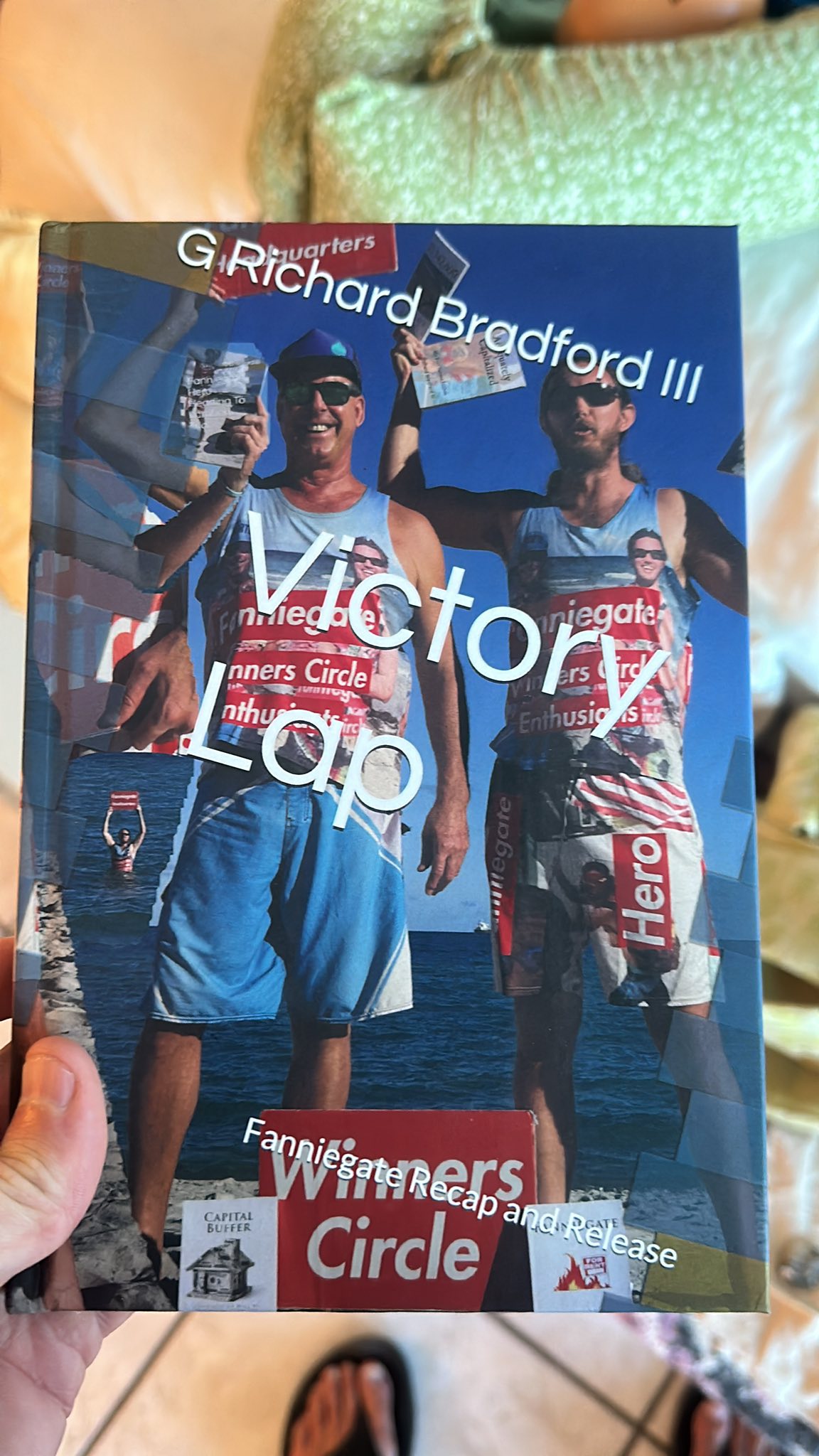
I've written nine of them. “Act As If” was the first — a book about mindset, about operating with conviction, about moving through the world as though the outcome you want is already inevitable. The title is the philosophy. Act as if you've already won, and the winning follows.
Then came the Fanniegate series. Multiple volumes documenting the government's seizure of Fannie Mae and Freddie Mac, the legal battles, the shareholder activism, the political landscape. These aren't light reading. They're dense, footnoted, evidence-based arguments for why the Net Worth Sweep was illegal and why shareholders will ultimately prevail.
I also have over 300 articles on SeekingAlpha. Deep-dive fundamental analysis, contrarian investment theses, the kind of long-form financial writing that most people don't have the patience to produce and most readers don't have the attention span to consume. But the people who do read it — the serious investors, the portfolio managers, the lawyers working on the Fannie/Freddie cases — they know the work is rigorous.
Writing is thinking. When you write 300 articles and 9 books about a single thesis, you either discover you're wrong or you discover you're more right than you thought. After a decade of writing about Fannie and Freddie, I'm more convinced than ever.
Chapter 12
The Act As If Philosophy
The title of my first book is also the operating system for my life.
Act as if.
Act as if you belong in the room with Jim Cramer when you're 22 years old and still in business school. Act as if you can analyze a billion-dollar company when everyone around you is older and has more credentials. Act as if your thesis is right even when the stock is going against you. Act as if you can build enterprise software that competes with teams 10 times your size.
This is not delusion. Delusion is believing something without evidence. Act As If is behaving with the conviction that comes from having done the work. I don't walk into a room and pretend to know things I don't know. I walk into a room having already done more research than everyone else in it.
When I was at General Electric, I didn't act like a co-op student. I acted like an engineer. When I was writing for Jim Cramer, I didn't act like a student columnist. I acted like an analyst. When I was fighting the government over Fannie and Freddie, I didn't act like a retail investor with a complaint. I acted like a shareholder with rights.
The world sorts people into categories and expects them to stay there. Student. Intern. Retail investor. Solo developer. I reject every category. I reject the premise that a 24-year-old can't manage a hedge fund, that a self-taught programmer can't build enterprise software, that a guy from Mishawaka can't go to Capitol Hill and tell the government it's wrong.
Act as if. And then do the work to make it true.
Chapter 13
The Numbers Don't Lie
Let me give you the position. Not the value — I'm not going to tell you what my portfolio is worth. But the position, because the position tells the story.
I hold junior preferred shares across 26 different series of Fannie Mae and Freddie Mac stock. Both companies. Both sides. People assume I'm a Fannie Mae investor because the name is more famous, but most of my shares are actually Freddie Mac.
I am approximately a 1% holder of FMCCS. I am approximately a 1% holder of FMCCJ. That means if you add up every share of FMCCS outstanding — every share held by every hedge fund, every institutional investor, every retail investor in the world — I own about 1 out of every 100.
This is not a casual bet. This is not a speculation. This is a conviction trade backed by a decade of research, hundreds of articles, nine books, and the belief that the United States government will eventually be forced to do the right thing.
The preferred shares have a par value — $25 or $50 per share, depending on the series. They were trading at steep discounts when I bought them. If the conservatorship ends and the companies are recapitalized — if the preferred shares are converted or paid out at anything close to par — the upside is enormous. If they're not, I lose everything. Again.
I've made peace with that. You have to, when you're making this kind of bet. You have to look at the worst case and decide whether you can live with it. I've lost a million dollars before. I've lost a million dollars quite a few times. I know what it feels like. I know what it does to you. And I'm still here.
Chapter 14
Why I Fight
People ask me why I do this. Why I spend years on a single trade. Why I write books about it. Why I post on Twitter every day. Why I lobby Congress. Why I don't just diversify and play it safe.
The answer goes back to the Chinese stock frauds.
When I got defrauded — when I lost everything to fake companies with fabricated financials — something broke in me and something was born in me at the same time. What broke was the naive belief that markets are fair, that regulators protect you, that the system works the way it's supposed to. What was born was the determination to fight fraud wherever I see it.
Fannie Mae and Freddie Mac are not Chinese reverse mergers. They're the backbone of the American housing market. They have real assets, real revenues, real profits. The fraud here isn't in the companies — it's in what was done to them. The Net Worth Sweep was the government deciding that it could take all the profits from two publicly traded companies and give nothing to shareholders. That's not a bailout. That's an unconstitutional taking.
I didn't choose this fight because it was easy. I chose it because I'd already been on the other side of a fraud and I know what it feels like. I know what it feels like to trust the system and have the system betray you. And I decided that this time, I wasn't going to be a victim. I was going to be a fighter.
When I hit the home run in Yellow Media, I had a choice. I could have taken the money and gone back to a normal investing career. Diversified. Played it safe. Compounded slowly and steadily and never put myself at risk again.
Instead, I looked at Fannie and Freddie and said: this is the biggest fraud I've ever seen, and someone needs to fight it.
I'm that someone.
Chapter 15
The Builder
Here's what people miss about me: the investing and the building are the same thing.
When I look at a stock, I'm looking for the gap between what something is worth and what the market says it's worth. When I look at software, I'm looking for the gap between what a tool should do and what the existing tools actually do. Both are about seeing reality clearly and then doing something about it.
Delivery Hub exists because I saw a gap. Salesforce consulting teams were drowning in spreadsheets and status meetings. Clients had no visibility into what was happening with their projects. Developers were spending more time reporting on work than doing work. The tools that existed were either too expensive, too complicated, or not built for Salesforce-native workflows.
So I built one. And then I used AI to build it 20 times faster than anyone thought possible.
The same analytical framework that lets me find undervalued stocks lets me find underserved markets. The same stubbornness that keeps me in the Fannie/Freddie trade keeps me shipping code at 2 AM. The same “act as if” philosophy that got me writing for Jim Cramer at 22 got me shipping 85 releases in 8 months at… well, at whatever age I am now.
I've been building things since I was a kid in Mishawaka coding the school newspaper. I never stopped. The medium changes — PHP websites, Apex triggers, managed packages, AI-assisted development — but the impulse is the same. See a problem. Build a solution. Ship it. Move on to the next one.
Chapter 16
The Toolbox
If you want to understand how I work, look at my tools.
I code in Apex, JavaScript, TypeScript, Python, PHP, C++, C#, VBA, SQL, SOQL. I've written software in more languages than most developers learn in a career. I didn't learn them in school — I taught myself most of them. The school taught me engineering and math. The languages I learned because I needed them to build whatever I was building at the time.
I have a Salesforce Force.com Developer certification. I've held Series 7 and Series 63 securities licenses. I have an MBA from one of the top business schools in the country and a BSIE from one of the top engineering schools in the country. I've managed teams of 30 people and I've been a solo developer. I've run a hedge fund and I've installed conduit pipe.
The point is not to brag about credentials. The point is that I don't fit in a box. And the most interesting things happen at the intersections of boxes.
The fact that I understand both finance and engineering is why I could see the Fannie/Freddie opportunity. The fact that I understand both business and technology is why I could build Delivery Hub. The fact that I understand both code and markets is why I can use AI to ship enterprise software at startup speed.
Most people specialize. They go deep in one thing. That's fine. But the people who change the world are the ones who go deep in multiple things and then connect them in ways nobody else can see.
Chapter 17
Open Source and the Future
I made Delivery Hub open source for a reason.
When I got defrauded by the Chinese stock frauds, part of what made it possible was opacity. The companies were opaque. The financial statements were opaque. The auditing process was opaque. Fraud thrives in the dark.
Transparency is the antidote to fraud. It's also the antidote to the kind of corporate BS that makes enterprise software so expensive and so slow.
Delivery Hub is open source because I believe the best software is built in the open. You can see every line of code. You can see every commit. You can see the 85 releases on GitHub and verify for yourself that they're real. There's no “trust me” — there's “read the code.”
It's also free because I don't believe in locking people into expensive tools. The Salesforce ecosystem is already expensive enough. You shouldn't need to pay for a project management tool on top of everything else. Install Delivery Hub, use it, customize it, make it your own. If you want Cloud Nimbus to help you with implementation or customization, great — we're here. If you want to bring your own team, also great. The tool is free and the code is open.
This is how software should work. Build something great, give it away, and make money by being the best at supporting it. Not by holding people hostage with proprietary licenses and vendor lock-in.
Chapter 18
Kite Surfing and American Flags
I kite surf.
I mention this because people who know me only from Twitter or SeekingAlpha probably imagine some guy in a dark room staring at stock tickers and filing FOIA requests. And I do that. But I also jump off waves attached to a kite on the ocean.
There's a photo of me on my website holding an American flag. Not in an ironic way. Not in a political way. In a “I love this country and I'm going to fight for it” way. The same country whose government I believe is perpetrating the biggest fraud in American history — I love that country. That's why I'm fighting. You don't fight for things you don't care about.
Kite surfing and Fanniegate don't seem related, but they are. Both require you to commit fully. You can't half-kite surf — you'll drown. You can't half-fight the government — you'll lose. Both require reading conditions and making split-second decisions. Both are terrifying and exhilarating at the same time.
And both are things that most people won't do because they're afraid.
Chapter 19
Do Not Lose
My Twitter handle is @DoNotLose.
It's not @AlwaysWin. It's not @MakeMoney. It's not @SmartInvestor. It's @DoNotLose.
There's a philosophy embedded in those three words. Winning is about gains — about adding to what you have. Not losing is about preservation — about refusing to give up what matters.
I've been in situations where winning wasn't an option. When the Chinese stocks went to zero, I couldn't win. When the Fannie/Freddie preferreds dropped 50% on a bad court ruling, I couldn't win that day. When I lost a million dollars for the second time, or the third time, winning was not on the table.
But I could refuse to lose. I could refuse to give up the thesis. I could refuse to stop fighting. I could refuse to let fraud go unchallenged. I could refuse to accept that the government can take private property without consequence.
Do not lose. Not the money — you can always make more money. Do not lose the fight. Do not lose the conviction. Do not lose yourself.
That's the message. That's the brand. That's the life.
Chapter 20
What Happens Next
As I write this, the Fannie Mae and Freddie Mac conservatorship is still ongoing. It has been ongoing for over 17 years. I've been in this trade for over a decade.
Every day, I wake up and the first thing I check is whether anything has changed. Court decisions. Political developments. Administrative actions. Regulatory filings. I've been doing this for so long that I have alerts set up, contacts in the shareholder community, and a near-encyclopedic knowledge of every legal case and every piece of legislation related to GSE reform.
I believe the conservatorship will end. I believe shareholders will receive value. I believe the preferreds will trade at or near par. I believe this because the law is on our side, because the companies are profitable, because the American housing market needs them, and because you cannot steal from shareholders forever in a country that claims to respect property rights.
But I don't know when. Nobody does. It could be this year. It could be next year. It could be five years from now.
What I know is that I'll be here. I'll be fighting. I'll be writing. I'll be posting on Twitter. I'll be building software. I'll be shipping code. I'll be kite surfing. I'll be holding the flag.
I'm the kid from Mishawaka who taught himself to code, who made a million by 24, who got defrauded and lost everything, who hit a home run and decided to fight fraud, who bet his entire net worth on two companies the government stole, who lost a million dollars quite a few times since, who built enterprise software with AI at a pace that makes corporate teams look like they're standing still, who wrote nine books and hundreds of articles, who was recruited by Jim Cramer and lobbied on Capitol Hill and refuses — absolutely refuses — to stop.
Do not lose.
A Note to My Parents
I am proud of my parents for raising me.
Not because they taught me about stocks or coding or business. They didn't. They taught me something harder: how to be the kind of person who keeps going.
Indiana is not Silicon Valley. Mishawaka is not Manhattan. I didn't grow up with connections or trust funds or a family name that opened doors. I grew up with parents who worked, who showed up, who did the right thing even when it was hard. Who raised a kid that would one day fight the United States government and build software and write books and lose a million dollars and get back up and do it all over again.
Everything in this book — the wins and the losses, the building and the fighting, the stubborn refusal to quit — started with two people in Indiana who decided to raise their kid right.
Thank you. I hope I'm making you proud.
About the Author
Glen Bradford is an investor, author, Salesforce developer, and the founder of Cloud Nimbus LLC. He holds junior preferred shares in Fannie Mae and Freddie Mac, is the creator of Delivery Hub, and is the author of nine other books including Act As If and the Fanniegate series.
glenbradford.com • cloudnimbusllc.com • @DoNotLose
This book was written with AI assistance, because of course it was.